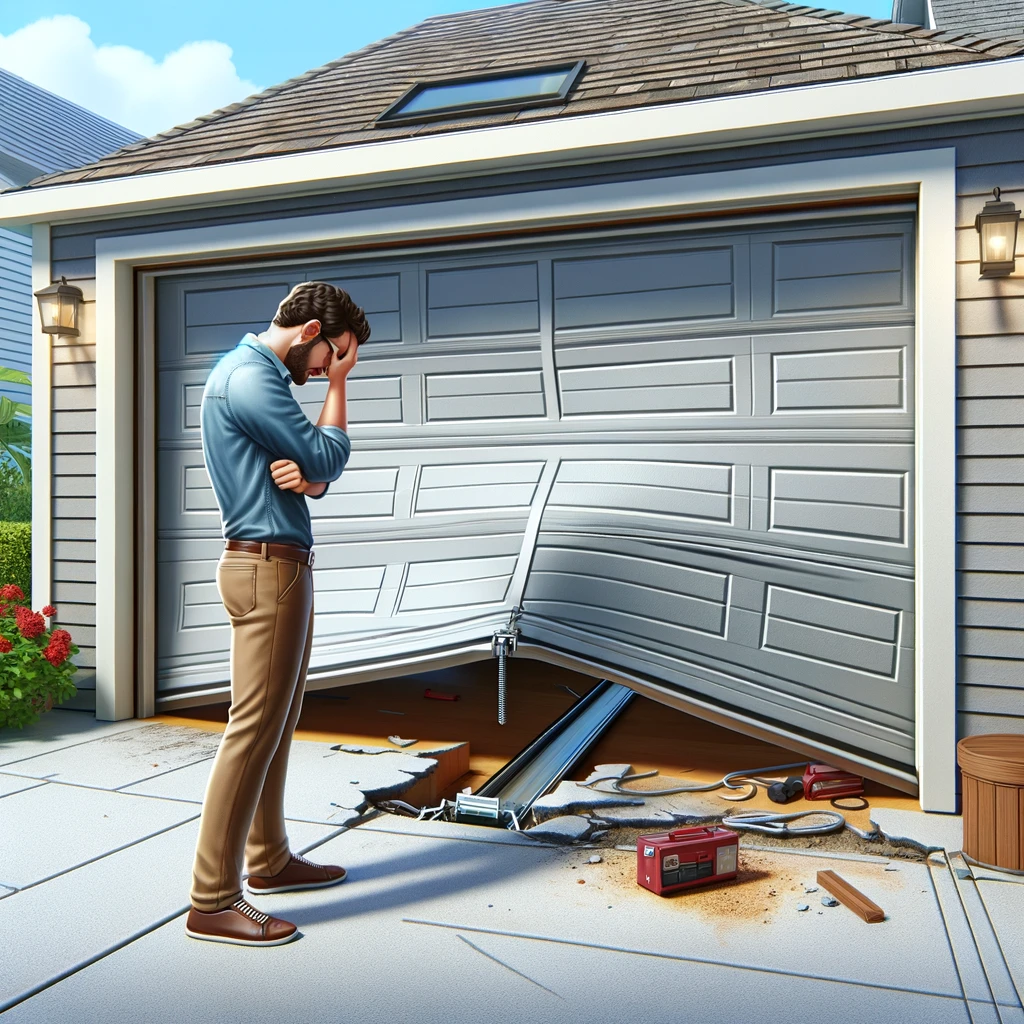
It is a familiar scene in Riverside driveways: you press the remote, the door starts down, then it stops and rolls right back up. Or it will not move at all. The good news is that most of these problems trace back to a short list of causes, and a few of them you can sort out in a couple of minutes without any tools. Below we walk through the eight most common reasons a garage door will not close, in roughly the order we run into them, with clear guidance on what is safe to check and what is best left to a pro. When in doubt, you can always send us a photo and we will tell you what we are looking at.
1. Blocked or misaligned photo eye sensors
This is the number one cause, by a wide margin. Every modern garage door has two small safety sensors, called photo eyes, mounted a few inches off the floor on each side of the opening. They shine an invisible beam across the doorway, and if anything breaks that beam the door refuses to close so it cannot crush a person, pet, or car. If your door reverses or will not start down, check the sensors first.
- Look for an obstruction: a trash can, a stray broom, a bike, even a leaf or cobweb across the lens can block the beam.
- Check the indicator lights: most sensors have a small LED. If one is off or blinking, the pair is out of alignment.
- Gently realign: the sensors must point directly at each other. A bump from a car door or a lawn mower can knock one out of aim.
- Wipe the lenses: dust and spider webs are common in Inland Empire garages and can block the beam.
If cleaning and realigning the sensors does not fix it, the wiring or the sensors themselves may have failed, which is a quick repair for a tech.
2. Something is in the door's path
Beyond the photo eyes, the door has a second safety system. If it touches an object on the way down, it is designed to reverse. A garden hose, a thin mat, a slightly raised threshold, or even a buildup of debris in the track area can be enough to trigger this. Walk the opening, clear anything in the way, and try again.
3. Close limit settings are off
The opener uses travel limits to know exactly where the floor is. If the close limit is set too far, the door hits the ground, thinks it has struck an obstacle, and reverses. This often shows up after a power outage, a new opener install, or seasonal temperature swings that subtly change the door's travel. The limit is adjustable, usually with small dials or buttons on the opener, but getting it right takes a little know how. If you are not comfortable, this is a fast fix for us.
4. Remote or wall button trouble
Sometimes the door is fine and the signal is the problem. Before assuming the worst, rule out the controls.
- Try the wall button: if the wall control closes the door but the remote does not, the remote likely needs a new battery or reprogramming.
- Replace the remote battery: a weak battery is a surprisingly common culprit.
- Check the lock feature: many wall consoles have a lock or vacation button that disables remotes. If it is on, the door ignores handheld remotes.
If your door keeps reversing, it can be tempting to hold the wall button to force it shut, which overrides the safety system. Please do not make that a habit. The reversal exists to protect people and pets. If the door will not close on its own, there is a real cause worth fixing. Call or text us at (909) 264-7415 and we will find it.
5. A broken spring
If the door is heavy, opens only partway, or slams down fast, a broken spring may be the reason. Springs counterbalance the door's weight, and when one snaps the opener can no longer manage the load safely. You may hear a loud bang when it breaks, or see a visible gap in the coiled spring above the door. This is not a do it yourself repair, springs hold dangerous tension. We cover the full picture in our guide on garage door spring repair cost in Riverside, and our spring repair service can usually sort it the same day.
6. A broken or off track cable
The lift cables work alongside the springs to raise and lower the door evenly. If a cable frays, snaps, or slips off its drum, the door can hang crooked, bind in the tracks, or refuse to close level. You might see a cable dangling or the door sitting higher on one side. Like springs, cables are under tension and should be handled by a pro. Our cable and roller replacement service addresses this safely.
7. The door is off its track
If a roller has jumped out of the track or the track itself is bent, the door can jam partway and stop. This often follows a bump from a vehicle or years of wear on the rollers. Do not run the opener repeatedly, it can worsen the damage. An off track door needs professional attention, which our off track repair service handles.
8. Power, motor, or logic board issues
Finally, the opener itself may be the problem. Check the simple things first: make sure the unit is plugged in and the outlet has power, since a tripped breaker or an unplugged cord is more common than people expect. If the motor hums but the door does not move, or the opener is unresponsive, the gears, capacitor, or logic board may have failed. Older units can simply wear out. If you are weighing a repair against an upgrade, our roundup of the best garage door openers for 2026 can help you decide.
What you can check vs when to call
To keep it simple, here is the dividing line we give our customers.
Safe to check yourself
- Clearing obstructions and wiping the photo eye lenses.
- Realigning sensors that are slightly off aim.
- Replacing a remote battery and checking the wall lock button.
- Confirming the opener is plugged in and the breaker is on.
Call a pro
- Any broken spring or cable, these hold dangerous tension.
- A door that is off track, bent, or hanging crooked.
- Limit adjustments you are not comfortable making.
- A motor that hums, grinds, or will not respond.
We answer 24/7 across Riverside and the Inland Empire, and most of these issues are a same visit fix. Not sure which one you have? Text us a short video or photo of the door and we will help you figure out the next step, with a free estimate before any work begins.