
Garage Door Spring Repair in Riverside
A broken spring is the most common reason a garage door quits, and it is one of the most dangerous to touch. We replace torsion and extension springs the right way, with correct sizing, paired replacement when it matters, and warranty backed work, often the same day.
Owner operated, insured, and background checked. You reach the official local business directly, not a call center or a lead seller.
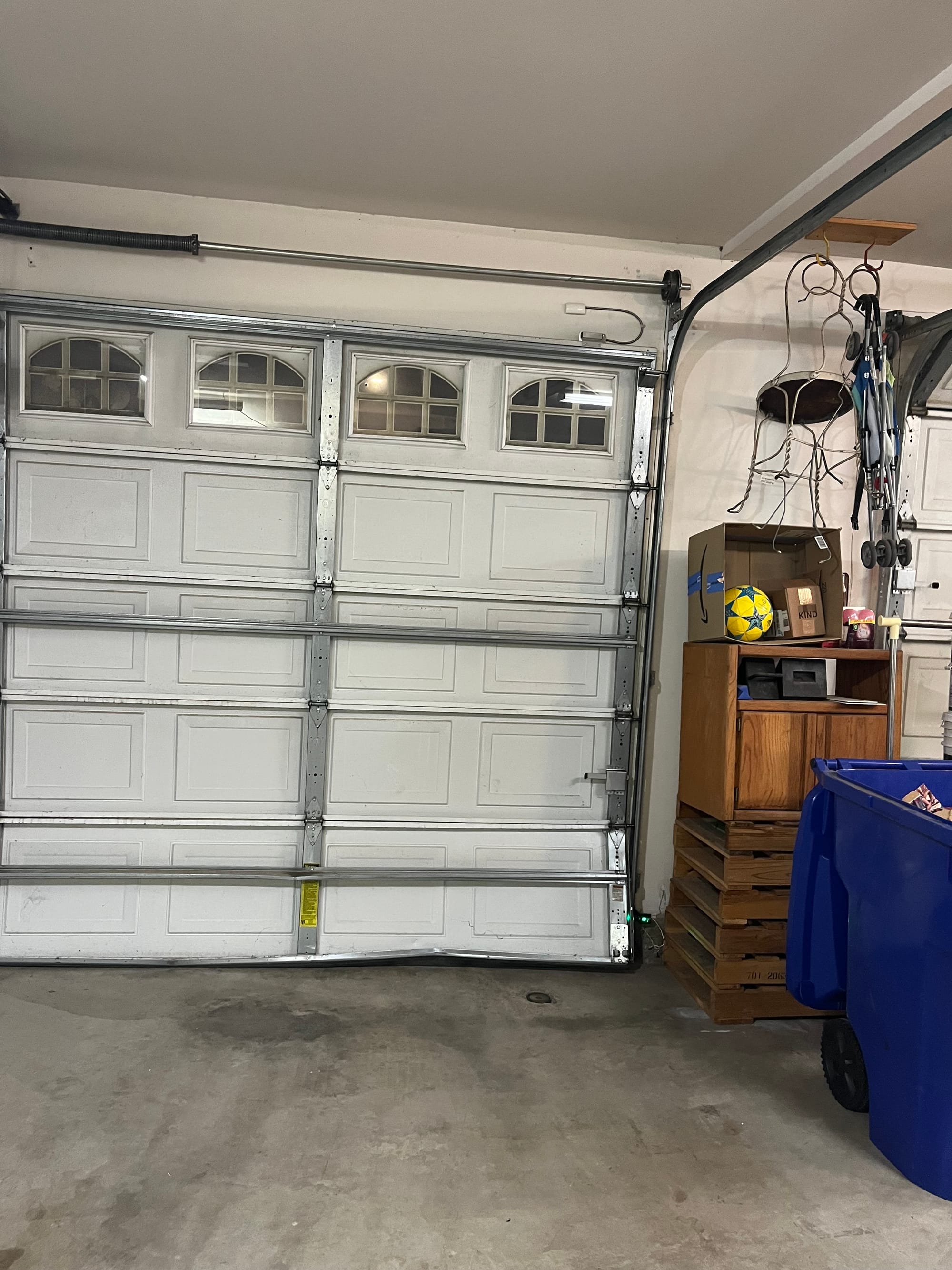
Signs your spring is the problem
The spring is what does the heavy lifting, not the opener. When it fails, the symptoms are usually clear. If any of the following sounds familiar, stop using the door and reach out.
A loud bang from the garage
A broken torsion spring releases its tension all at once. People often describe it as a gunshot, a firecracker, or a heavy metal pipe slamming. It is the single most common sign, and the door usually will not open afterward.
The door opens a few inches, then stops
If your opener lifts the door four to six inches and then quits or reverses, it has hit its force limit because the spring is no longer helping carry the weight. The opener is protecting itself, not failing.
The door feels very heavy or slams down
A balanced door should hold its position when you lift it by hand with the opener disconnected. If it feels like dead weight or drops fast, the spring has lost its tension and the door is unsafe to operate.
A visible gap in the torsion spring
Look at the spring on the bar above the door. A clean two to three inch gap in the coil means it has snapped. This is the most reliable visual confirmation, but do not touch it. Send us a photo instead.
Frayed or hanging cables
When a spring breaks, the lift cables on the sides often go slack, fray, or jump off the drum. Loose cables and a crooked door usually point back to a spring or balance problem that needs to be addressed together.
The opener strains, grinds, or struggles
An opener is built to guide a balanced door, not to haul it. If it labors, hums, or pulls hard, a weak spring is forcing it to do work it was never designed for, which shortens the life of the motor and gears.
How we fix it, step by step.
A spring is not a one size fits all part. Getting it right takes measurement and a real balance test, not a guess. Here is exactly how we approach every spring job.
Balance test first
We disconnect the opener and lift the door by hand to feel exactly how far off the balance is and confirm the spring is the real cause.
Identify torsion vs extension
Torsion springs sit on a bar above the door. Extension springs run along the tracks. Each type calls for a different part and a different method.
Measure the correct wire size
We measure the wire diameter, the inside and outside diameter, and the overall length so the replacement matches the weight your door actually carries.
Match the cycle rating
We confirm how the door is used and recommend a standard or higher cycle spring so it lasts the way it should for your household.
Replace in pairs when appropriate
If your door uses two springs, we usually replace both so the door stays balanced and you avoid a second breakdown weeks later.
Inspect cables, drums, bearings
While the door is open we check the lift cables, drums, and center and end bearings, because a worn part nearby will undo a fresh spring.
Lubricate and re-balance
We wind the spring to the correct tension, lubricate the moving parts, and re-test the balance so the door floats smoothly and quietly.
Full safety test
Finally we cycle the door with the opener, confirm the auto-reverse and photo eyes work, and make sure everything is safe before we leave.
Why correct sizing matters
A spring is engineered to counterbalance one specific door weight. A spring that is too weak makes the opener strain and wears it out early, leaves the door heavy, and can fail again fast. A spring that is too strong forces the door open, slams it on the way down, and puts dangerous stress on the cables, drums, and brackets. The right wire size, diameter, length, and cycle rating are what make a door feel light, run quietly, and last for years. That is why we measure instead of grabbing whatever is on the truck.
Please do not attempt this yourself
Garage door springs are wound under extreme tension. A torsion spring stores enough force to break fingers, an arm, or worse if it releases while you are working on it. Every year people are seriously hurt trying to swap a spring with hardware store parts and the wrong tools.
Do not try a do it yourself spring replacement. Do not loosen the set screws, do not unwind the spring, and do not lift the door by hand if it feels heavy. Do not force the door with the opener, because that can bend the track and turn a simple repair into a much larger one. The safe move is to leave it alone and call a trained technician with the right winding bars and the correct part.
What we replace
A spring rarely fails on its own. We carry quality parts and cycle-rated options so your door runs longer, and we replace the related hardware that wears alongside the spring.
Torsion springs
The springs on the bar above the door, used on most modern garage doors. We size single and dual torsion setups by weight and offer higher cycle options for doors that open many times a day.
Extension springs
The long springs that stretch along the tracks, common on older and lighter doors. We replace them in matched pairs with safety cables so a future break stays contained.
Lift cables
The steel cables that carry the door up and down. They fray and snap under the same stress that breaks springs, so we inspect and replace them whenever they show wear.
Drums
The grooved drums that wind the cables on the torsion bar. Worn or mismatched drums make a door lift unevenly, so we confirm they match your door before we finish.
Bearings
The center and end bearings the torsion bar spins on. Dry or worn bearings cause grinding and added strain, so a fresh set keeps a new spring running smoothly and quietly.
Rollers
The wheels that ride in the track. Cracked or noisy rollers add drag that wears the spring faster, so we swap them for quiet, long-life rollers when needed.
Ask about cycle-rated springs. They cost a little more up front but can roughly double the life of a door you open several times a day, so you replace it far less often.
Why choose us for your spring repair
Everything below is true and checkable. We do not display awards, licenses, or certifications we have not earned.
Our promise on every spring job
We stand behind every repair with a clear warranty and honest, upfront pricing. If a fix is not right, we come back and make it right. That is how we have earned 4.7 stars on Google and hundreds of recommendations across the Inland Empire.
Straight pricing and warranty backed work
No call center scripts, no high pressure upsells, and no surprise charges after the work is done. Here is what you can count on when you call us for a spring repair.
Frequently asked questions
Straight answers to what people ask us most about garage door springs.
How much does garage door spring repair cost?
How long do garage door springs last?
Should I replace one spring or both?
Can I use my garage door with a broken spring?
Do you carry spring parts on the truck?
Is a broken garage door spring an emergency?
Spring repair across the Inland Empire.
Based in Riverside and serving homeowners, businesses, and property managers across the region, day and night. See the full service area map and city list.
Not sure if you are in our area? Call or text (909) 264-7415 and we will let you know right away.
Broken spring right now? We are one call away.
Call or text the official local business. Tell us what is happening, send a photo of the spring above your door, and get a straight answer with a free upfront quote.